Monday, December 28, 2015

6 Medical Myths Debunked For Christmas

In a study published in the Christmas 2008 issue of the British Medical Journal (and not one of their prank articles), Aaron Carroll, M.D., M.S., and Rachel Vreeman, M.D., M.S., of the Indiana University School of Medicine, explore the science behind six myths commonly associated with the holidays yet relevant year-round.
  • Sugar makes kids hyperactive.
  • Suicides increase over the holidays.
  • Poinsettias are toxic.
  • You lose most of your body heat through your head.
  • Eating at night makes you fat.
  • You can cure a hangover with…
These beliefs are commonly accepted as true, not only by the general public, but also by many physicians. To the surprise of the authors, who are health services researchers with the Indiana University Center for Health Policy and Professionalism Research, the Regenstrief Institute, and Indiana Children's Health Services Research, they found all six myths to be false or unsupported by medical research.


Rachel Vreeman, M.D., M.S., assistant professor of pediatrics, Indiana University School of Medicine and affiliated scientist, Regenstrief Institute.Photo: IU School of Medicine>
Does sugar make kids hyperactive?
This is without a doubt false, report Dr. Vreeman and Dr. Carroll, who are both pediatricians at Riley Hospital for Children. They write that "in at least 12 double-blinded, randomized, controlled trials, scientists have examined how children react to diets containing different levels of sugar. None of these studies, not even studies looking specifically at children with attention deficit-hyperactivity disorder, could detect any differences in behavior between the children who had sugar and those who did not." This includes sugar from candy, chocolate and natural sources. Even in studies of children who were considered "sensitive" to sugar, children did not behave differently after eating sugar-full or sugar-free diets.
But what is most amazing, says Dr. Carroll, is that in studies in which parents think their children have consumed sugar, parents rate their children's behavior as more hyperactive, even if in fact no sugar was consumed. "Obviously the differences in the children's behavior were all in the parents' minds," he says.
This doesn't mean that sugar is good for children, it only means that it doesn't make them hyperactive. "There are many good reasons for parents to restrict their children's sugar consumption, including risks for obesity and cavities," Dr. Vreeman notes.
Does the number of suicides increase over the holidays?
The holidays can bring out the worst in people, and the stresses of family get-togethers, loneliness, and the cold, dark winter months are commonly thought to increase the number of suicides at Yule time. But studies conducted around the globe show that, while the holidays may be a difficult time for some, there is no scientific evidence to suggest a holiday peak in suicides, according to Dr. Vreeman and Dr. Carroll. Furthermore, suicides are actually more common during warm and sunny times of the year.
They emphasize that suicidal thoughts should be taken seriously at all times.
Are poinsettias toxic?
Dr. Vreeman and Dr. Carroll found that the largest study of poinsettia "toxicity" to date involved an analysis of 849,575 plant exposures reported to the American Association of Poison Control Centers. None of the 22,793 poinsettia cases revealed significant poisoning. No one died from poinsettia exposures or ingestions, and more than 96 percent did not even require treatment in a health care facility. Another study, looking at poinsettia ingestion by rats, could not find a toxic amount of poinsettia, even at doses which would be the human equivalent of consuming 500-600 poinsettia leaves or a pound and a half of the plant's sap. Dr. Vreeman cautions, though, that you should always call a poison control center if someone eats a plant not intended for consumption.
Do you lose most of your body heat through your head?
Both Dr. Vreeman and Dr, Carroll assumed this one was true. After all, mothers have been repeating it for decades. But, in fact, it is not true.
They believe this myth likely originated with an old military study where scientists put subjects in arctic survival suits without hats and measured their heat loss in cold temperatures. They did lose the most heat through their heads, but only because it was the only bare part of their body. Vreeman and Carroll found that more contemporary experts say that, had this same experiment been performed with subjects wearing only swimsuits, with much of their bodies exposed, the subjects would not have lost more than 10 percent of their body heat through their heads.
"Any uncovered part of the body loses heat and will drop the core body temperature proportionally," the IU researchers note. They recommend keeping all parts of the body warm when out in the cold, but the head does not require special attention. As pediatricians, they counsel parents to dress their children appropriately for the weather year round.
Does eating at night make you fat?
Dr. Vreeman and Dr. Carroll write that at first glance, some scientific studies seem to support this idea. But just because obesity and eating more meals at night are associated, it does not mean that one causes the other. People gain weight because they take in more calories overall than they burn up. Eating more meals, and taking in more calories makes you gain weight regardless of when calories are consumed.
The bottom line, say Dr. Vreeman and Dr. Carroll, is that the time of day or night when one eats is irrelevant. People gain weight because they take in more calories overall than they burn, regardless of when these calories are consumed.
Can one cure a hangover with…fill in the blank?
Both Dr. Vreeman and Dr. Carroll believed that neither "hair of the dog" or any other remedy could alleviate a hangover. And they were right. They found no scientific evidence supporting any cure for alcohol hangovers. A hangover is caused by excess alcohol consumption. Thus, the most effective way to avoid a hangover is to consume alcohol only in moderation or not at all.
Why did they do this study? "Examining common medical myths reminds us to be cognizant of when evidence supports our advice [as physicians or as parents], and when we operate based on unexamined beliefs. This was not a systematic review of either the evidence to refute these medical myths or of doctors' beliefs. Nonetheless, we applied rigorous search methodology to compile data, and evidence of the prevalence of these medical beliefs is readily available. Only by investigation, discussion, and debate can we reveal the existence of such myths and move the field of medicine forward," they write.

4 Heart Healthy Resolutions For Women In 2016

“Heart disease was once considered only a man’s problem,” says Whitney Patterson, nurse practitioner at Catawba Valley Cardiology. But according to the American Medical Association (AMA), cardiovascular disease is also the #1 killer of women.
For a long time it was thought that women were not as susceptible to heart disease as men. The initial results of an ongoing study, published in the 50’s, showed men as more likely to have heart disease. But as time progressed, it’s been found that women are also at risk; they just develop diseases of the heart 10 to 15 years later than men.
“The American Heart Association (AHA) estimates that 1 in 9 women ages 45 to 64 have some sort of heart disease but the ratio jumps to 1 in 3 for women over 65. So it’s essential that women and men adopt a heart healthy lifestyle and maintain it, as they get older. This is especially true for those with a family history of heart disease,” explains Whitney.
Whitney suggests these 4 New Year’s resolutions to jump start a healthy lifestyle while reducing your risk of cardiovascular disease:
  • Stop smoking – The AMA says smoking is responsible for 1 in 4 cases of cardiovascular disease; if you smoke, stopping can be the most important thing you do for your heart and blood vessels. For more information on CVMC’s resources to help you quit smoking, contact Peggy Messick at the Health First Center – pmessick@catawbavalleymc.org or 828.326.2300 x6202
  • Control your weight – Obesity increases your risk of heart disease and stroke, even if you have no other risk factors present. Maintaining a healthy weight through a low-fat, low-cholesterol diet and regular exercise can reduce your risk of heart disease.
  • Exercise – Regular aerobic activity plays a significant role in preventing heart and blood vessel disease. You don’t have to spend hours every day at the gym either. Even a 30 minute walk, three or four times a week, can be beneficial. Check out Fitness Plus, our medically-based fitness facility, online to see a comprehensive list of dynamic wellness programs offered.
  • Get a heart screening: A heart screening includes checking your risk assessment, blood pressure, body mass index (BMI), cholesterol levels, blood glucose, and other heart disease indicators.
2016 is your year to become heart healthy. If you are at risk, think you may be at risk or want to learn more about how to reduce your risk for heart disease, consult your primary care provider or visit Catawba Valley Cardiology online. With over 110+ years of combined experience, we are ready to serve as your first line of defense in guarding your most valuable possession of all: your HEART!

20 Healthcare CEOs reveal their resolutions for 2016

As 2016 approaches, Becker's Hospital Review asked 20 CEOs to tell us their New Year's resolution.
Below are their responses.
David Bailey, MD, President and CEO of Nemours Children's Health System (Jacksonville, Fla.)It's really one of personal balance. I'd like to balance my physical, spiritual, emotional and mental needs. So it isn't a matter of losing weight or working less. It really is a balance.
Patrick Board, President and CEO of Union Health System (Terre Haute, Ind.)For me, it's to continue to retool my skill set. In light of new dialogue, I can continue my reshaping of how I view the world of healthcare and what my role in that is.
Ruth Brinkley, President and CEO of KentuckyOne Health (Louisville)
My resolutions are to: Build a strong, collaborative relationship with the new governor of Kentucky and his administration, continue to integrate and grow KentuckyOne Health clinical service and product offerings to more fully advance our goal of improving the health of the persons and communities we serve, and take more time to celebrate the successes individuals and teams are making at all levels across KentuckyOne Health. From continued systemwide financial improvements to individual acts of compassion and care at the bedside, there is a lot to celebrate.
Kenneth Davis, MD, President and CEO of Mount Sinai Health System (New York City)My resolution is to have 500,000 patients cared for under value-based contracts at Mount Sinai.
Howard Drenth, President and CEO of Presence Medical Group (Chicago)I usually don't make New Year's resolutions, but if I had to make one, it would be to work harder at a life balance. My kids are growing into young adults and I want to spend more time with them while they are in this stage. On a personal basis, I would also love to run a half marathon as a personal goal.
Larry Kaiser, MD, President and CEO of Temple Health University Health System (Philadelphia)For us, it is to maintain the highest quality in the care we provide to the underserved community, but also to continue to deploy technology to better allow us to care for patients in all settings. I also want to continue to be the best leader I can be, and continue to create an environment where people can reach their full potential.
Margo Karsten, PhD, CEO of Cheyenne (Wyo.) Regional Medical Center and Cheyenne Regional Medical GroupI would say to stay focused on my priorities, which are my faith, my family and my career.
Mike Kasper, CEO of DuPage Medical Group (Downers Grove, Ill.)[DuPage's] New Year's resolution is to become the industry leader in virtual healthcare. That means not just telehealth visits, but how we communicate with our patients about test results. The industry has been slow to embrace technology and interfacing with patients in a digital manner. This doesn't replace the physician-patient relationship, but we think it has the opportunity to augment it. We're committed to not only getting into that space, but we also want to be the industry leader.
John (Jack) Lynch III, President and CEO of Main Line Health (Bryn Mawr, Pa.)
My personal one is I've lost 45 pounds over the last three months and I intend to keep them off. My New Year's resolution is to maintain my commitment to my own personal health for my benefit, my family's benefit and my institution's benefit. My institutional New Year's resolution is to lead and collaborate with my colleagues to best understand how we can further improve the quality, increase the safety and lower the cost of what is best described as exceptional care provided in this country. But it needs to be even better, even safer and less expensive. It's going to require all of us — payers, providers, pharmaceutical companies, suppliers and patients — all working together to figure out how to do that.
Mary Lou Mastro, President and CEO of Elmhurst (Ill.) Memorial HealthcareMore sleep, more exercise, less Fritos!
Joseph Mullany, CEO of Detroit Medical CenterI'd like to continue to contribute to Detroit's revitalization in lasting and meaningful ways including continuing to invest in DMC initiatives to ensure access to care for all, community outreach that creates a healthier Detroit and southeast Michigan, and collaborations in groundbreaking research with the DMC's research partners.
Lynn Nicholas, President and CEO of Massachusetts Hospital Association (Burlington)I will be visiting six countries surrounding the Baltic Sea in June and I want to read a substantial book about each to better understand their culture before I get there. So I better get started now!
Mike Robertson, CEO of Piedmont Newnan (Ga.) Hospital
Walk or run a 5K and spend more time with my children.
Richard Roodman, CEO of Valley Medical Center (Renton, Wash.)I have five kids, I'm married and I have a host of extended family. My New Year's resolution is to finally realize that when someone in my family says, "Hey, Dad, what do you think?" (or "Hey, hun," if it's my wife), I need to remember that they really don't want to know what I think. They want me to listen and agree with whatever they say or want.
Tomi Ryba, President and CEO of El Camino Hospital (Mountain View, Calif.)
My New Year's Resolution is to always model the way through my own life-work balance and more frequently honor the remarkable talent at El Camino Hospital in service to our community.
Cherie Sibley, CEO of Clark Regional Medical Center (Winchester, Ky.)At Clark Regional Medical Center, our goal is to be the safest hospital in Kentucky. We were fortunate to achieve that designation by Consumer Reports this year and it is my goal to achieve it every year. To continue to provide the safest, high-quality care to our patients is very important to me and our staff. On a personal note, I strive to a) Keep the patient first in my decisions; b) To remember the golden rule — treat others as you would want to be treated, and instill that in our organization; c) Be in the moment. There are many priorities for leaders; however, it's very important to focus on the people, to listen and to be engaged.
Earl Steinberg, MD, CEO of xG Health Solutions (Columbia, Mo.)My New Year's resolution is to get [xG Health's] first EHR software app sold and implemented in a provider site. We'd like to do it by the end of the first quarter.
Susan Turney, MD, CEO of Marshfield (Wis.) Clinic Health SystemIt transcends my personal and professional work. We need to stay the course during these times and stay focused on the big picture. In my mind, this is being able to do what's right to ensure the patients and communities we serve are at the center. The challenge is not being able to put our patients first.
Chris Van Gorder, President and CEO of Scripps Health (San Diego)At the end of every day of work, I sit in my car for a few seconds before I drive home to ask myself a simple question, "Would our organization's founders — Ellen Browning Scripps and Mother Mary Michael Cummings — be proud of what I did today?" So my resolution this next year will be the same as it has been every year and every day for years. At a time of great change in healthcare — at a time when we are designing and building the future healthcare delivery system — would our founders be proud of what we are doing? And I believe that if we truly keep the patient in the center of that new model of care, they will be.
Kate Walsh, President and CEO of Boston Medical CenterWellness is a pretty traditional New Year's resolution for all of us, but this year I'm making the resolution not just for myself but for all our staff at BMC and for the community we serve. In 2015, we launched a number of new wellness initiatives for BMC employees, because staff wellness and well-being is central to making sure we can in turn provide the best possible care for our patients. That's work we're going to continue in the year ahead. Similarly, patient wellness — and by that I mean not just treating patients when they're sick, but preventing them from getting sick in the first place. BMC has a long history of this approach. Whether a doctor writes a prescription to our in-hospital food pantry for nutritious meals, or for a bike to get exercise, or if we help patients deal with the asthma triggers in their homes, BMC caregivers work to treat the whole patient, not just the specific condition that's brought them to our hospital.

The true spirit of Christmas

"A wise man has something to say; a fool has to say something." BA Baracus (Mr T)
As I sit writing this, there are 28 shopping days to Christmas. As we live in a 24/7 world where we can shop online at any time of the day or night, this tells you precious little. But suffice it to say that the festive season is nearly upon us.
At this time of year there is an expectation (sometimes unspoken) for us all to be merry. With the prospect of a few days' holiday, some time spent with loved ones and at least one cracking meal, perhaps this is fair. For many this expectation can prove to be too much. Christmas can serve as a reminder of particularly painful times, an anniversary of bereavement or just a reminder of those no longer there to share the Christmas meal. For others the universal goodwill only acts as a stark contrast to how they feel, accentuating their depression. Knowing that many will be joyfully reunited with their families and friends may make others feel even more alone. For these reasons there is something of an urban legend that this time of year always tops the charts for most suicides. In fact research shows us that suicides and deliberate self-harm attempts decrease in the run-up to Christmas Day. There is an increase in events related to those with chronic alcohol misuse problems around New Year, but otherwise no significant change. Perhaps this reflects the success of care planning and available support services - a cause for self-congratulation amongst the negative media stories. What do you think?
Christmas will also bring the usual glut of patients with coughs and colds that 'need sorting out' before the holiday, along with other unrealistic expectations. I just hope that I will have enough reserves to listen patiently to those who need a sympathetic ear, reassure appropriately (and with no loss of temper) those who think I have a magic wand and still have enough energy to buy presents, send cards and cook a bigger than usual lunch. Each year I think how much more in the true spirit of Christmas I would be if I volunteered at a local shelter - although I doubt my husband or boys would agree. The years I spent in hospital medicine where I seemed inevitably to be working over the Christmas period, were despite the granny dumping and the less-than-amusing drunks, very satisfying. Perhaps I've just grown older and look back with rose-tinted glasses. No doubt those who still work in that environment will correct me and I'm sure 20 years have changed everything hugely. However, no matter where you work, at Christmas we will need to deal with other people's stress as well as our own. Dust off your smile and your coping mechanisms. Good luck.
In the last month we have updated the following articles on Psoriasis following NICE guidance published at the beginning of November: Chronic plaque psoriasis P+ (PIL also updated), Psoriatic nail disease PIL, Psoriatic nail disease P+ and Psoriatic arthritis. We have also responded to the Department of Health's decision to routinely vaccinate babies against rotavirus (PIL also updated) and updated immunisation schedules.

10 Biggest Innovations in Health Care Technology in 2015

A new year is upon us and we are already seeing amazing advancements in healthcare technology, everything from enterprise cloud software to nanobots.  Is healthcare finally catching up with the times?
New startups and fortune 500 companies alike, are in a modern-day health care gold rush, with everyone trying to stake their claim.  What are your thoughts on promising healthcare technologies coming out this year and in the future?

Last years 2014 HEALTHCARE TECHNOLOGY UPDATE:

After you read this article, take a look at our previous update, The 7 Biggest Innovations in Health Care Technology in 2014 [INFOGRAPHIC] 
Want to be featured as a top health IT company?
Does your company have what it takes to be included in our “10 Biggest Innovations in Healthcare Technology in 2016”?  Send us an email to learn how to recognized as a global leader in digital health to millions of referralMD readers annually.
healthcare technology 2015

To those that embrace the future, here are the leading health care technologies to look forward to.

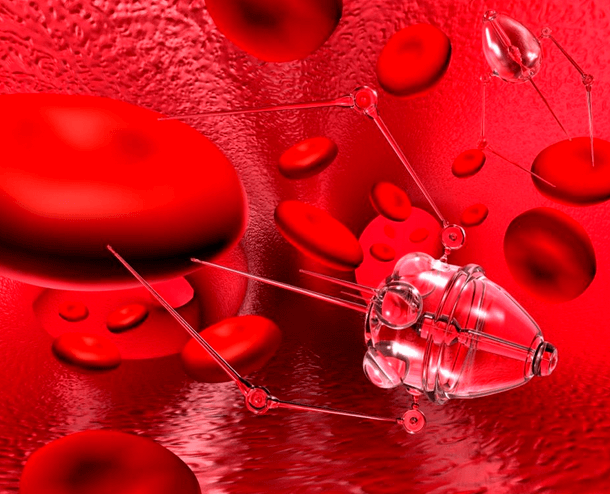
1.     Nanobots in Blood

Although nanobots are far from being utilized today, but the future is coming where these tiny robots can function like our own white blood cells and destroy bacteria and other pathogens.
Nanorobots
These miniature robots would function like their full-size equivalents with their own sensors, andpropulsion systems and could perform small tasks like delivering chemotherapy 1000 times more powerful than using drugs and would not cause as many side-effects to patients like the current treatments do.
Other specific types of nanobots that are being developed are Microbivore, Respirocyte, Clottocyte, and Cellular repair nanobots that can destroy bacteria, carry oxygen, create blood clots for wounds, and repair cells.
The future is closer than we think, I remember just yesterday playing the Atari 64 with a single joystick and thinking, “Wow this is amazing!”

2.     Head Transplants and Mind Transfer

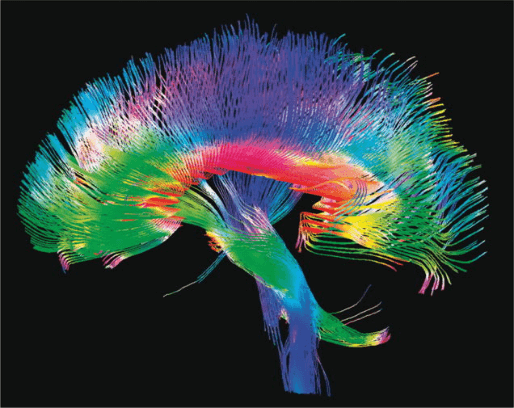
Ever since the dawn of man, we have all wanted to live forever, and one day that may become reality with companies like Google and Brainpreservation.org looking for ways to extend life by curing disease,  preserving our brains in stasis, or saving them on computers or another brain.
Brain Preservation
While it may seem strange for a tech company like Google to join up and fight the healthcare battle, it makes sense that their CEO Larry Page may want to improve his life and other’s around him and so they can solve life’s other tough challenges in the years to come.
Google fights death
How will this be accomplished…
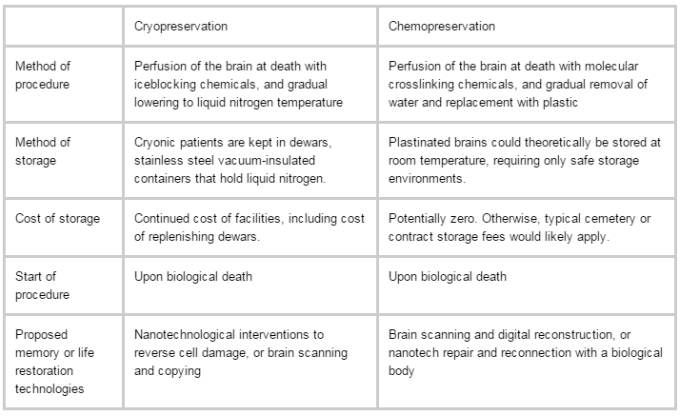
Currently there are three methods cryopreservation, chemopreservation, and a hybrid approach that uses a blend of both methods.
brain storage
A futuristic approach…
If Moore’s law holds, within a few decades, a supercomputer might be able to simulate a human brain at neural level at faster perceived speed than a biological brain. However, the exact date is difficult to estimate due to limited understanding of the required accuracy, and computational speed is not the only requirement for making full human brain simulation possible.
A full brain map has been estimated to occupy less than 2 x 1016 bytes (20,000 TB) and would store the addresses of the connected neurons, the synapse type and the synapse “weight” for each of the brains’ 1015 synapses.  However, the biological complexities of true brain function (e.g. the epigenetic states of neurons, protein components with multiple functional states, etc.) may preclude an accurate prediction of the volume of binary data required to faithfully represent a functioning human mind.
Current research
Copying one’s  human brain to a computer or host may still be many decades away due to the massive amounts of nerve cells called neurons, 85 Billion to be exact and the complexity of mapping each connection, but that is not stopping current researchers from mapping the  C. Elegans roundworm.
This worm was the first organism to have its genome sequenced, and the first to have its entire brain mapped. It is largely hermaphrodite, with 959 cells each of which has also been mapped. Its network of 302 neurons connect via 6393 synapses – its connectome – and link to the worm’s 95 muscles at 1410 junctions.
Independent researcher Tim Busbice has already created a digital copy of the worm’s brain with the data from the Openworm project and created an avatar to host the animal with wheels for muscles.
Another doctor by the name of Dr. Sergio Canavero believes that it’s now possible to slice the head of off one person, stitch it to the decapitated body of another, and then reanimate the two-human mash-up. What’s more, he says the first head transplant operation could come in two years, New Scientist reported.

3.     The Hospital Experience

We all know that visiting a hospital is no thrilling experience, but companies like NXT Health are looking change the way we experience treatment in our rooms.
The goal with the modernized room design are to improve the interoperability of the systems in order to eliminate the wasteful redundancy and technological clutter that plague many modern healthcare facilities.
In order to facilitate changing technology and the dynamic needs of healthcare systems, the space features a pre-fabricated, modular system of interchangeable parts that allow adaptations to occur with a minimal impact on facility operations. Additionally, the technological touch points that are woven into the concept empower patients to have a sense of comfort and control during the medical experience by empowering them to connect with remote loved ones, collaborate with caregivers, and adjust various environmental features.
See the NHS, Stanford Hospital or Ottawa Hospital for practical examples. And companies such as the recently launched Calico from Google will make attempts at reaching these goals.

4.     Robotic “Flight Simulator” Surgery

Roswell Park Cancer Institute is quickly becoming one of the leaders in surgical training, thanks in large part to a creative collaboration between University at Buffalo’s School of Engineering and Applied Sciences and  RPCI’s Center for Robotic Surgery . Surgical procedures have always required years of training, and until recently most of that training is done in a live environment.
robotic surgery training
No sane person would climb aboard a commercial airliner if we knew the pilot was currently training on his or her first flight. We like to think of pilots as highly seasoned and experienced professionals. Many pilots first learn how to take the controls in realistic simulated environments, they learn how to fly without ever touching a flight control. We should treat surgery the same way, and we should expect that getting rid of the kinks has already taken place.
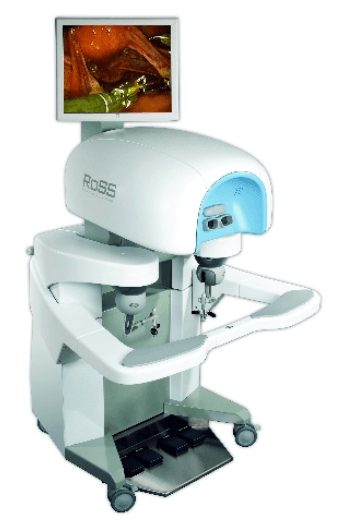
RoSS (Robotic Surgery Simulator) is changing the way surgeons hone their craft. Allowing real-world views of actual surgeries can give aspiring, practicing, or professional surgeons the chance to experiment and get it wrong in a simulated environment. More importantly, it gives these surgeons the tools they need to get it right when the time comes to perform surgeries when lives are at stake.
Although this specific tool has been around for a little while they are now being produced bySimulated Surgical Systems. Soon we may see productive alternatives to real-life surgical practice around the country.

5.     Holographic Images

Hospitals are a place to go when you’re sick to get treatment, but did you know that in the United States, more than 2 million people are affected by hospital-acquired infections every year, and100,000 people die as a result. and it costs an estimated $20 billion to treat these infections.
One area that can help dramatically is the ability to input data without actually touching physical  devices such as keyboards, the mouse, etc.  I remember last time I went to the dentist they put their gloves on as standard procedure and checked my teeth, but as they reached for the keyboard to input their findings they touched the mouse and keyboard which had no disposable cover.  The main issue is that these input devices are swiped with a disinfectant cloth but are not cleaned properly.   Imagine how many germs from 100’s of patients are collecting in the crevices.
holographic input - keyboard
A holographic data input like a keyboard or mouse may help reduce the amount of infections people are exposed to.
Some people may say this does not feel natural and like the ability to physically touch keyboard keys or other inputs so a company out of Tokyo, HaptoMime, uses reflective surfaces to create a floating virtual screen that you can actually feel. The technology is in its infancy but may hold some promise.

If you are looking for a very simple virtual keyboard, you can already purchase one on Amazon.

Another example:
Another application for holographic imaging  is to provide physicians with a comprehensive view of the procedure details as seen in a short video below.

6.    Enterprise Cloud Business Intelligence Software

Building a new medical or dental  business today, or maintaining relationships from your current network of referring providers is hard enough, and it is even more so when almost 100 percent of the healthcare system still relies on referral pads as one of the main sources of outreach to find and educate their network of services available at their facility.
medical and dental marketing service
Need help creating a referral network? Read the article, How to Build a High-Performing Physician Referral Network from Scratch
As it stands today, a provider that wishes to grow their network will hire staff or an outsourced marketing company. They then create a referral pad with questions specific to every specialty in their organization and go door to door trying to build relationships with other providers, in hopes that they generate an increase in referrals.
This is changing with applications like referralMD | Physician Referral Management Platform In the Cloud, that help providers create the referral letters digitally and allows the organization to promote themselves to millions of patients and other providers looking for treatment options.
Gone are the days of a Primary Care doctor calling a specialist and saying “Can you get in the car and deliver more forms so we can send you a referral” or having the PCP maintain 100’s of paper forms in their back office for every specialist they work with.
Why is this important?
The current method of using paper causes upwards of 50% of patient referrals to never result in a doctor’s visit.  This huge gap in care causes patient’s to lose treatment, the healthcare facility to lose money,  and increases the potential of malpractice lawsuits due to improper hand-offs and lack of audit trails.  Consider this the next time you use a referral pad.

7.    A Better Blood-Test Experience

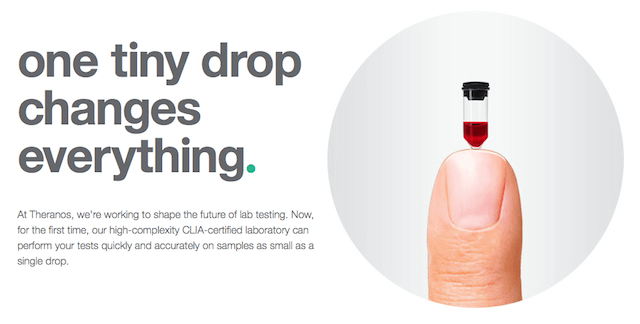
No one likes needles, especially when you repeatedly have to get pricked by an inexperienced phlebotomist.   Great news!  Companies like Theranos have designed away to run tests with micro-samples of blood, 1/1,000th the size of a typical blood draw.  The benefits are a better patient experience, but also a cost reduction in lab fees, which can be substantial.
theranos blood testFor example:
One of the most common blood tests is the complete blood count (CBC) which assesses the cells in blood. It is not, as the name suggests, a test which completely tests everything in blood. It looks mainly at the three main types of cells in blood – red blood cells, white blood cells and platelets.
  • CPT code: 85025
  • Medicare Price: $10.69, Theranos price: $5.35

8.    Mitochondrial DNA Transfer

Alternatively known as a “three parent baby” this process helps eliminate a variety of potentially fatal diseases like heart and liver failure, and deafness. Although many ethical and moral questions surround the recent U.K. approval of this process, the potential implications for future generations is boundless.
Mitochondrial DNA Transfer
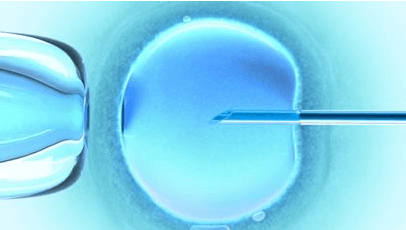
Mitochondrial DNA Transfer is when two parents contribute normally to an in vitro fertilization and a third-party contributes the mitochondrial DNA. The first two successful transplants of mitochondrial DNA occurred in the late 90’s as a result of fertility experimentation for previously unsuccessful couples.
The reason this makes the list for 2015 is that these procedures are becoming recognized for the potential that they may deliver. The reduction of gene related diseases may mean longer lifespans, improved health, and even the elimination of certain diseases. This process may also enable couples to conceive children who without it would never have the possibility. As these procedures are perfected and the science becomes more transparent the usefulness of this technology only grows exponentially.
The moral and ethical implications may lead to a platitude of arguments in the future, like whether or not designer babies will become a normal wealthy indulgence. Because these arguments exist, the rest of the world may experience a delay in acceptance of procedures like these; however, the potential benefits are likely to greatly outweigh the few extravagant outliers that always seem to expose themselves.

9.    Stem-cell Reconstructive and Plastic Surgery

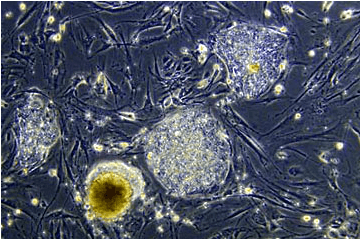
Stem-cells seem to have fallen from the spotlight in recent years, a few fraudulent claims and a variety of government hurdles has dampened these research fields in the United States. Finally some approved practical applications have started to surface in a variety of different fields.
stem cells
Recently Dr. Rey has been spotted claiming that the majority of his breast augmentation surgeries are now performed by injecting stem-cell enhanced fat into procedure areas. The use of stem-cells for a variety of augmentations is starting to replace lipo-filling, which is the practice of removing full fat cells from one part of the body and transplanting them to another.  This type of procedure can be used to help fix facial deformities, recover tissue lost due to cancer, and a wide variety of other necessary plastic surgeries.
Many scam based claims have been made by less than reputable service providers that stem cells can have glorious results for somewhat common procedures. Unlike those claims, using stem-cell augmented fat cells has been proven. In a study performed by Copenhagen University stem-cell enhanced fat cells retained 81% of initial volume through four months, in comparison with only 16% mass retention when lipo-filling alone is used.
The exciting part about this advancement is that stem-cell enhanced fat cells can be used in so many different environments, and the accepted uses of this technology will only grow as more benefits are uncovered. Replacing invasive surgeries with something much less complicated reduces recovery times and lessens the likelihood of mistakes and unforeseen complications.

10.    Augmenting Human Capabilities

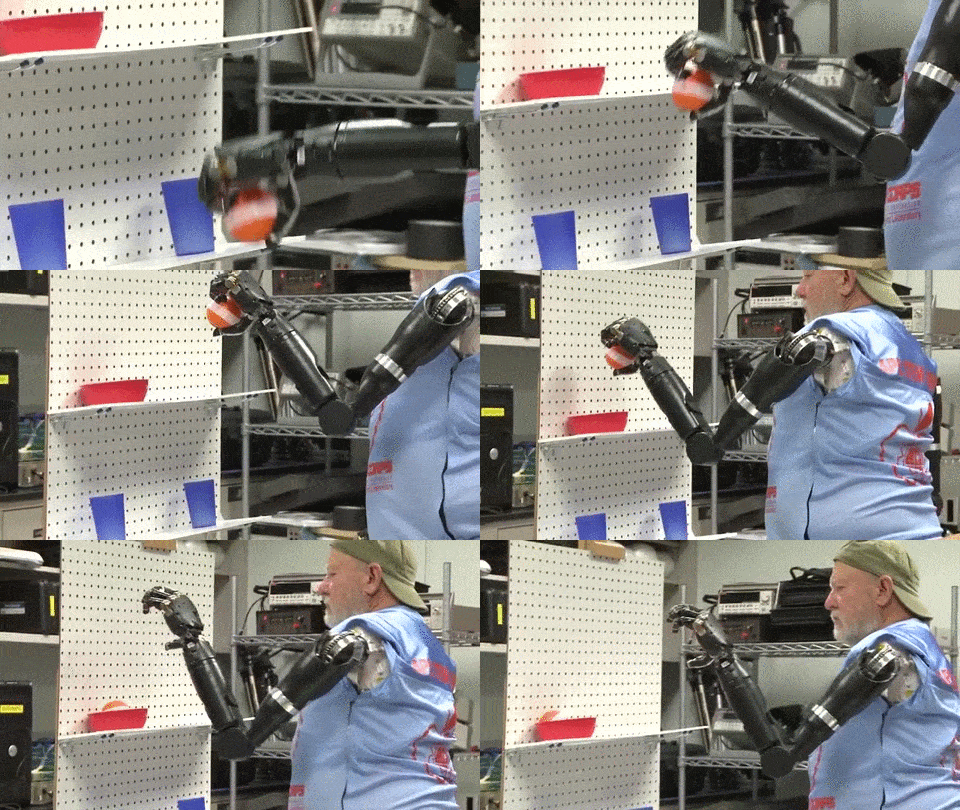
Perhaps the most visually impressive display of healthcare technology innovation is the video of Les Baugh controlling prosthetic arms with his mind alone.
Augmenting human capabilities
Through extensive research on the way Les’ mind controlled his limbs, researchers were able to determine how mind managed these connections. With that research they were able to develop a technology that would read his brain activity and send the signals to sockets that controlled the motor functions of his prosthetic limbs.
An exciting technology spearheaded by an exciting pioneer, Mike Mclaughlin likens the current stage of this technology as the beginning of the internet. Funded by DARPA, Johns Hopkins Applied Physics Laboratory is being tasked with creating naturally controlled artificial limbs – which we can see is already becoming a reality.
The reality of this science is that all of our lives will be changed, weather we know it now or not; just like the beginning of the internet when no one believed it would be useful, this will change the course of history.